(Para español, haz click aquí)
Sucumbíos: prepared by chef Galo Sánchez
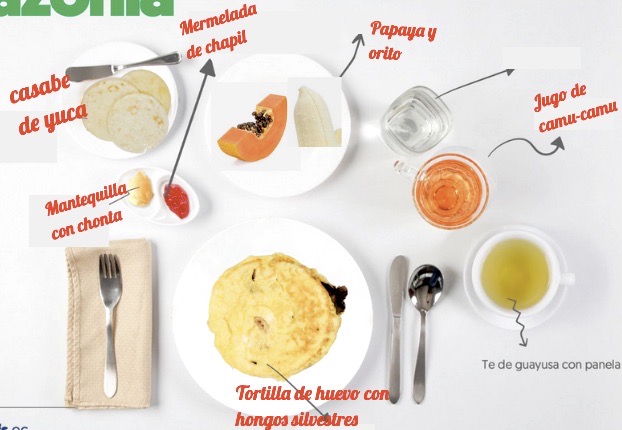
An impressive variety of fauna, flora, and Amazonian cultures make Sucumbíos one of the most attractive provinces to foreign and national visitors alike. The heat of the jungle and the uniqueness of the foods here found have evolved the gastronomy of this region, resulting in original menus that can be enjoyed from early in the morning. We begin this breakfast with an egg omelette with wild mushrooms, which elevate both the flavor and the protein content of this dish to up to 40 percent. To accompany the omelette, a cassava casabe is served: this type of crispy tortilla has been eaten in the area since pre hispanic times. It can be used as a vessel for the tortilla, or with a little bit of butter mixed with chonta, a palm fruit that has come to be a cultural reference across the entire Amazon region. This delightful butter comes along with a portion of chapil jam. Chapil is a palm fruit of a variety of palm native to the Ecuadorian Amazon. The little round fruit grows in abundance in this province and provides its residents with a great source of vitamin A, as well as an acid and sweet flavor that makes for a scrumptious jam.
A portion of fresh fruit, to aid digestion, features local papaya and a small variety of banana called orito. Consumption of oritos support local economies.
To freshen up from the rising morning temperature, a camu-camu (Myrciaria dubia) juice. This Amazon fruit of acidic flavor comes highly recommended by nutritionists, particularly because of its anti inflammatory properties and its phenolic components, which encourage regulation of sugars in the blood. A hot infusion of guayusa concludes this breakfast with a high doses of energy.
Napo: prepared by chef Josefina Nolivos
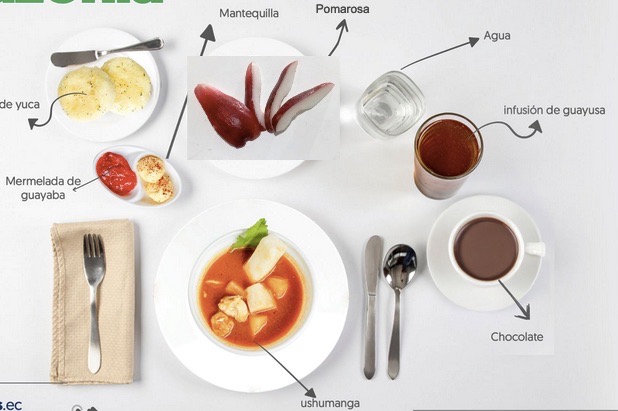
An exploration of the province of Napo is no small thing. Rubber boots, a good bug repellent, and a barril of curiosity is necessary to begin to understand all this province has to offer. But before the adventure begins, breakfast is served. A pot of ají, or ushumanga in Kichwa, is an Amazon specialty consisting of fish, hearts of palm, white cacao, and cassava. It is accompanied by cassava patties, as cassava is an ancestral food that all cultures of the Amazon have developed into a great variety of dishes and byproducts for centuries. Onto the patties one can spread a little bit of a mix of butter and sacha inchi. Sacha inchi is one of two types of endemic peanuts, locally grown in crop rotations, as peanut cultivation gives nitrogen back to the soil. This delightful peanut butter of sorts is accompanied by a guava jam, which weighs on three variety of trees in large areas of the province. Pink guava is particularly high in calcium and phosphorus.
A portion of fresh rose-apple contributes an important amount of vitamins and minerals to this breakfast, aside from reminding visitors of the beautiful trees that decorate their shade with a carpet of pink petals. Rose-apple trees commonly grow on the outskirts of populated areas and are considered a local treat.
With a millenary Amazon plant, waysa in Kichwa, we make an infusion of guayusa, which is not only good for a number of ailments, but makes a most refreshing drink. Alongside a hot chocolate is served, since Napo is a producer of cacao, which is then combined with high quality, organic ingredients in order to create a unique experience. Its balanced flavor presents tropical tones and a touch of soil that reflects the Amazon jungle where cacao is grown.
Orellana: prepared by chef Galo Sánchez
Under the fertile land of Orellana rests a thick, black treasure. Over the Amazon surface of this great province breathe hundreds of trees that are routinely chopped down for wood trade. The people who live here are tragically used to losing their treasures in the name of progress, however when it comes to food, they are generous hosts, free with their culinary treasures. The day begins deep in the jungle with a muselina made with chicken meat, mountain cilantro, and a miniscule pepper known as mouse chilli. Next to the medallions is a plantain crepe. Plantains in this are are different from the ones found in the coastal region, as they grow in the wild and thus have a different flavor. To spread onto the crepes there is a paparawa butter. Paparawa, as is known in Kichwa, comes from a tree which, despite not being native of this continent, has been growing spontaneously in the Amazon since prehispanic times. Its fruit slightly resembles a custard apple, however it is the seeds that are toasted and consumed, their flavor and appearance resemble chestnuts. To this nutty butter we add a jam made with wild naranjilla and ginger, a masterful combination to compliment the plantain crepe.
With delight and a bit of caution, as this fruit is a powerful digestive, we offer slices of pitahaya, sometimes called dragon fruit, which is cultivated extensively in the Joya de los Sachas canton. A refreshing drink of hibiscus flower is served next to a hot guayusa and unrefined sugar tea, an energizing drink with a hefty load of antioxidants, widely consumed by locals on a daily basis.
Pastaza: prepared by chef Galo Sánchez
The biggest province of Ecuador stands out both by being the territory with the most biodiversity and by being the cradle of seven indigenous civilizations: Quichuas of the Amazon, Andoas, Zápara, Huoranis, Achuar, Shiwiar and the Shuar. We begin the day in Pastaza with a meal that adjusts to vegan diets: a portion of blanched hearts of palms. Ecuador is one of the main exporters of hearts of palms in the world, and has been repeatedly recognized for its superior flavor and texture. Next to the hearts of palm we have another set of round slices, this time fried: patacones of yurimagua plantain, which is an endemic species in this area. To the patacones (a bit like thick chips) one can spread either a bit of margarine mixed with white cacao, — though if one prefers butter, local herdsmen will be most grateful — or a sapodilla jam, a native fruit to the Amazon jungle which, aside from providing a generous amount of vitamins and minerals, is also high in protein.
With so many novelty foods, the fruit of Pastaza could be no less special: a portion of morete, peeled and blanched. Morete is a fruit of a tall palm, which has one of the highest concentration of carotenoids of any plant in the world. Approximately 20 times that of a carrot.
We refresh this breakfast with a cold infusion of guayusa, chilled with mint ice cubes, for added flavor, and to finish off, a filtered coffee grown and processed locally.
Morona Santiago: prepared by chef Josefina Nolivos
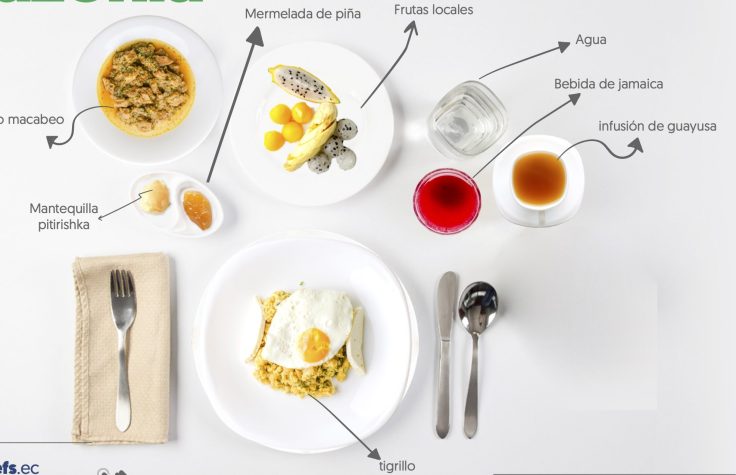
The jungle of Morona Santiago combines views that could only exist in the depth of the Amazon with views that evoke admiration for the high Andes. The indigenous communities of Morona Santiago share ingredients and cooking methods with their Amazon neighbours, however, they have their own plethora of delightful dishes. Breakfast here begins with a province-specific tradition: a sudado macabeo, which consists of diced beef cooked in a pot with the lid on, so that the meat “sweats” and marinates in its own juices. To this we add a full dish of tigrillo, made with plantain, a fried egg, and some fresh cheese. To the tigrillo one can add a bit of pitirishka butter, made with hot chillies, as this adds a touch of spicy to the tigrillo. Onto to the cheese we add some pineapple and green papaya jam; the local production of pineapple and the abundance of papaya make this a good combination, which becomes even better when cooked with spices such as cinnamon, cloves and ishpingo.
Local growers of hibiscus flowers sponsor this cold beverage, popular drink in the region. Hibiscus flowers have extensive nutritional value, and although it is diminished when boiled, it still represents a good input of nutrients to a balanced diet. The biggest input of vitamins and minerals in this breakfast, however, is in the fresh fruit: a cacao cob. The cacao pulp, known as mucilage, has been ignored for a long time by those who cultivate the tree for its seeds, yet this is a priced food to a wide variety of jungle animals, as it contains high nutritional value.
We finish off with a hot infusion of guayusa. The recipe of this particular infusion results in a delightful tea, which is consumed daily by the residents of Morona Santiago. It consists of roasting guayusa leaves with a little bit of sugar, and once it caramelizes water is added and left to boil for a few minutes.
Zamora Chinchipe: prepared by chef Galo Sánchez
Uphill goes the vegetation, like a thick green carpet that covers all surfaces with flowers and leaves. Downhill go the mighty rivers where the excess of humidity, everpresent, gathers. In between the ups and downs of mountain ranges lives a rich world of extraordinary animals, tourist attractions and enticing food. A good day in the Amazon border province of Zamora Chinchipe begins with a smoked pork cecina. The cooking method for this dish comes as an influence of the Saraguro people, and following tradition, is served with slices of boiled cassava, a root that consumed in abundance in the Amazon region. The cassava goes perfectly with some local butter, which support small cattle operations, and a yellow guava jam, an absolute delight with its acid and sweet tones.
A portion of fresh soursop provides calcium, fibre, and potassium to the diet, aside from representing the effort of local farmers in El Pangui canton, where these fruits are hand-pollinated.
We energize this breakfast with a cold infusion of coffee husks, and we finish the most important meal of the day with a cup of hot chocolate, as the cultivation of cacao is widespread in the region and in order to recognize that Zamora Chinchipe is the true origin of cacao, as has been concluded by archaeologists and scientists in recent years.
 Lorena Fernández Abdo
Leave a comment