(Para español, haz click aquí)
Esmeraldas
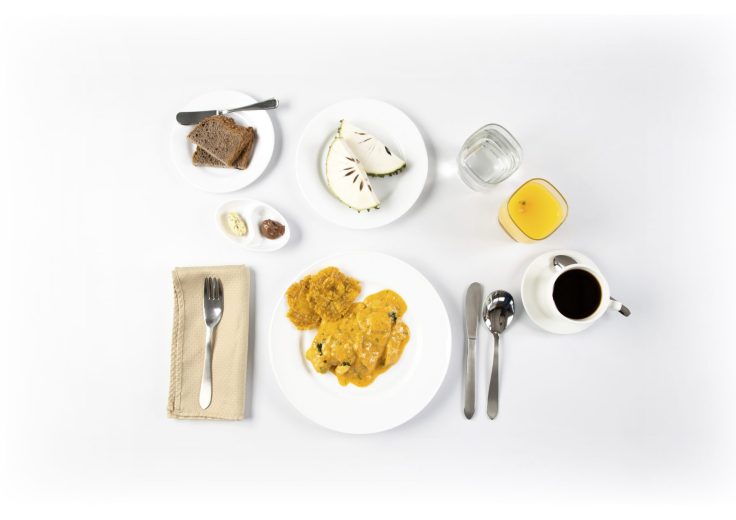
A good day in Esmeraldas begins with fish. The Esmeraldas encocado is prepared with a type of river fish commonly known as sábalo, which makes the bounty of local fisherman’s catch. This dish has gained prestige over the last few years at culinary events at a national and international level. An important representation of Esmeraldas’ food, and a testimony to the flavor fusion of this coastal province, the encocado is the centerpiece of a true Esmeraldas’ breakfast.
The best possible partner to the encocado is the king of the local economy: plantain. It features one way on another in all the best coastal culinary specialties. Aside from being a vital component in the region’s culture and economy, it is a carbohydrate of low glycemic index and high in prebiotic fibre. The production and sale of plantains generates jobs and creates economic opportunities for local agricultural communities.
Esmeraldas is one of the main producer provinces of passion fruit in Ecuador. This crop offers opportunities for agricultural entrepreneurs because it does not require a major investment, and the demand for its refreshing tropical flavor has been on the rise around the world.
There is a growing production of coffee in this province, which has the potential to become an important part of the region’s economy. The arabica and robusta varieties have the most presence in Esmeraldas.
Despite being cultivated in various regions across the world, the consumption of soursop is mostly limited to Latin America. When served in a way that is easy to consume, this fruit is well received, particularly by foreign tourists who are not familiar with it.
Chillangua is a herb from a bush that is commonly found in Esmeraldas. Its scientific name is Eryngium foetidum, and some people know it as “cilantro” or “mountain cilantro” in other regions. It has a strong and distinct flavor, similar to cilantro though with a more intense and slightly spicy undertones. It’s best enjoyed when added after the heat is turned off in order to preserve the intensity of the herb.
This being a cacao-producing province, it is vastly benefiting from the recent reassessment of the historically discarded fruit pulp in the production of chocolate. The juicy pulp has a slightly acid and sweet flavor, perfect for juices, smoothies, and jams.
Manabí: prepared by chef Marel Rojas
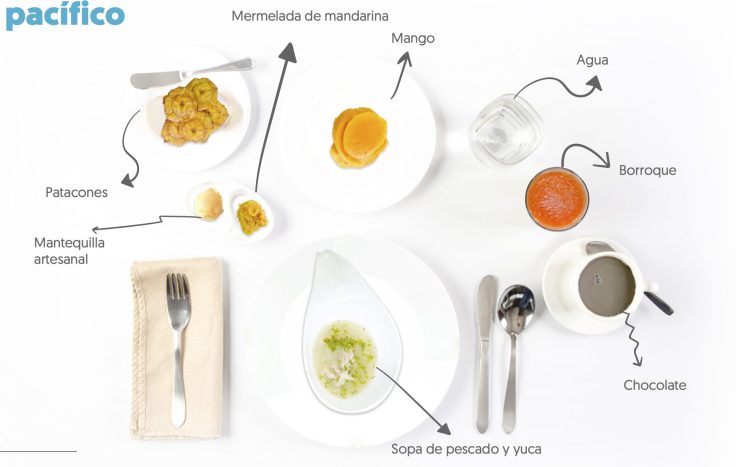
In the vast coastal province of Manabí, people eat well. There is, in fact, such devotion to the preparation of food, that dishes like encebollado have surpassed national boundaries and become known around the world. While it is fair to point out that the soup of cassava and albacore known as encebollado originated next door in Guayas, this dish, which can also be made with other types of tuna or Pacific bonito is widely consumed all along the region.
The famous patacones — slices of green plantain fried, squished, salted and refried until golden — go very well with encebollado, as with an innumerable variety of other coastal dishes. They are eaten with a little bit of sprinkled salt, adorned with cheese, or drowned in spicy sauce, however for breakfast one can simply spread a little bit of white butter, a Manaba specialty made with local cream and stored inside bamboo stalks. Someone with a sweet tooth might also try a patacón with a bit of mandarin jam, made with raw cane sugar from nearby Junín.
To accompany this laborious soup and carbohydrate, a glass of borroque; a cold drink made with boiled chontilla and yellow plantain, which is peeled, sived, and slowly mixed with the previously boiled plantain, because no one here is shy in the kitchen.
Since Manabí is a producer of both cacao and high-quality dairy, a hot chocolate is a must, and makes a perfect contrast with a plate of fresh cut mango, served cold. This tropical fruit is so common here that residents of Puerto Viejo called themselves “mango suckers”.
Guayas: prepared by chef Luis Cedeño
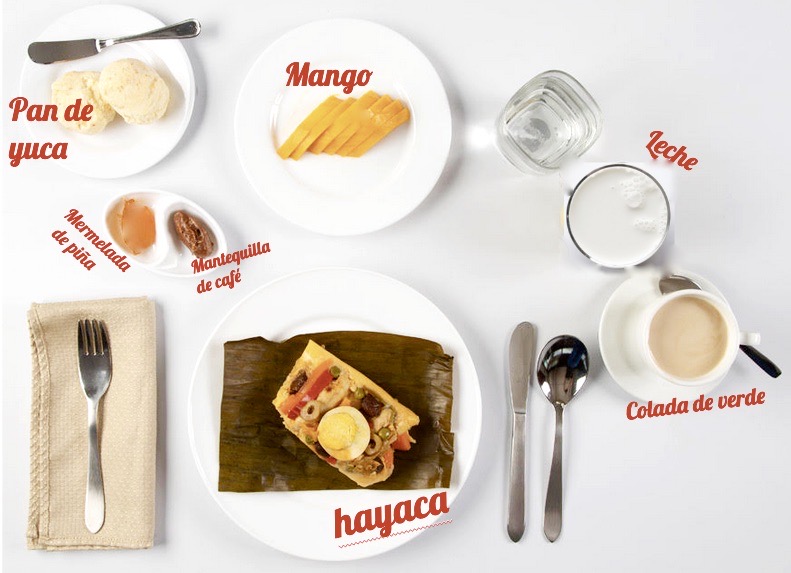
From the rural fields to the big city of Guayaquil, one of the more popular foods remains the free-range chicken. In a meloso, aguado, seco or, to cure a common cold, a good broth, the options are plentiful. However, the chicken hayaca is a culinary feat worthy of a breakfast’s centerpiece. Steamed in a banana leaf and adorned with colorful ingredients, the hayaca is made with maize flour traditionally, and this particular recipe is made with rice flour. Nonetheless, the dough representing a carbohydrate on this particular breakfast are little “pearls of the Pacific”: cassava bread. A coastal delight that has become popular across the country, cassava (or yuca) bread is a perfect balance between fresh cheese and cassava starch, which results in a bun that can be eaten by itself or with a spread or, say, coffee butter, or pineapple jam. The cultivation of pineapple in Ecuador is mainly focused in coastal provinces, and while the pineapples of Los Ríos and Santo Domingo are spread to the world through export, the pineapples of Guayas are the ones consumed inside the country.
To accompany the tropical jam, a portion of freshly cut mango is added to this perfect breakfast. One way or another, the flavor of mango is quintessential on any given hot day in the Ecuadorian coast.
A cold glass of milk is how people in Guayas fulfill their required intake of calcium, and to finish this meal on a high note, a hot, creamy beverage of plantain.
Los Ríos: prepared by chef Marco Jácome
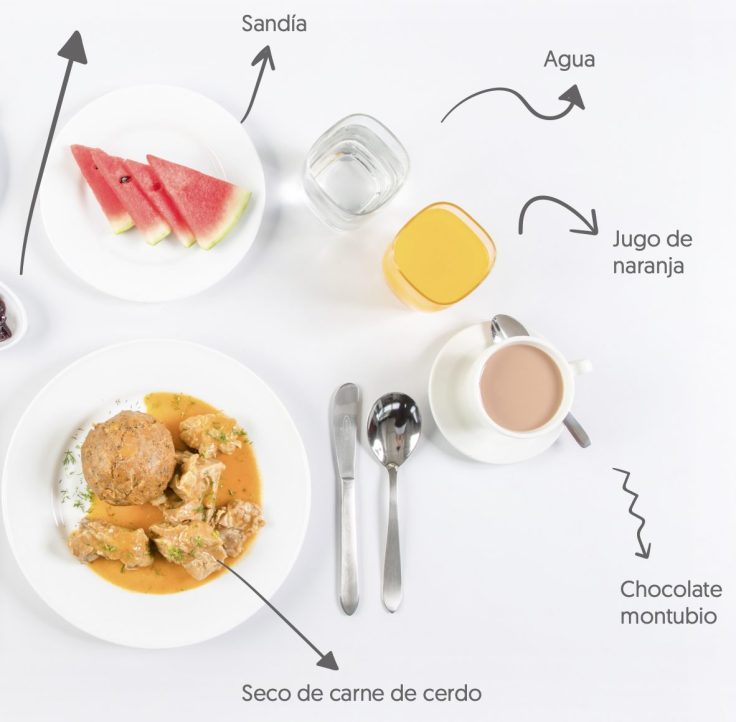
The only coastal province without any coast, Los Ríos is considered a center of agriculture in the country, specializing in cacao and rice. As such, a montubio hot chocolate is a must during breakfast, yet the spotlight on the table is aimed at satisfying pork lovers, which abound in Ecuador: the seco de chancho. This typical dish consisting of cubed pork meat stewed in a spice and vegetable sauce, is often served with a mound of rice for lunch, however for breakfast it pairs wonderfully with a cheese bolón. The famous bolón, made out of plantain and often filled with bacon and cheese, originated in the coast, but its delightful taste has made it famous all around the country, including regions where plantain is not grown. In Los Ríos, the great variety of recipes for the perfect bolón demands that visitors try it more than once. To take the flavor of the bolón to a new level, a sprinkle of sal prieta is offered. Sal prieta consists of roasted peanuts and maize processed into a paste along with annatto and spices. To complete the dish, a couple of slices of fresh coastal cheese, onto which we spread a delightful pechiche jam. Pechiche is a fruit that comes from a tree of the same name, endemic to South America and currently an endangered species. It gives fruit annually, usually right before the start of the rainy season. In pechiche season, the families of Los Ríos harvest the fruits and cook them for a long time with raw sugarcane and spices.
In view of the high production of citrus fruits in this province, a freshly squeezed orange juice is perfect to refresh the palette, as well as a portion of watermelon, recently harvested.
Santa Elena: prepared by chef Alonso Saltos
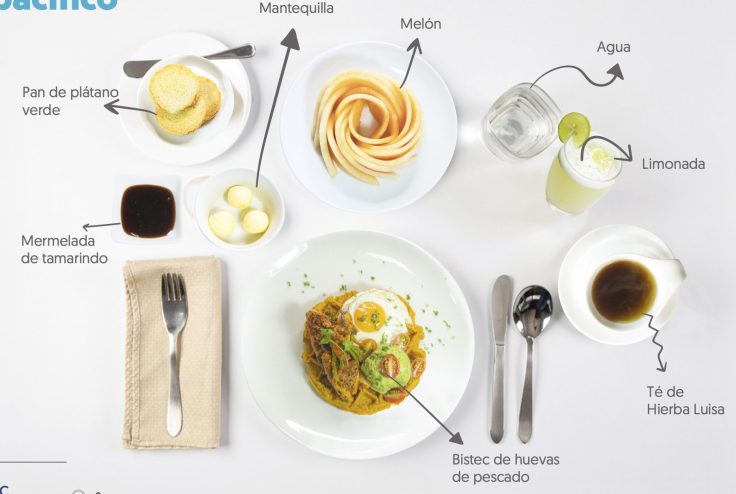
In Santa Elena the day begins with a unique coastal specialty. A fish roe steak, made with big head tilefish, a popular local choice and the protagonist of the famous Holy Week soup, fanesca. The steak comes with creamy mashed avocado, and a couple of fried eggs, to complete this filling serving of protein. This exemplifies the effort and authenticity of the gastronomical offerings of Santa Elena. Still more impressive, this origina breakfast is served with a plantain waffle, adding an international touch to the most important and versatile ingredient in the region.
The fruit portion in this breakfast is cantaloupe, widely cultivated across the province. Served freshly cut, it provides not only a juicy and sweet element to the breakfast, but also balances the meal with a fresh element.
In order to intensify the flavor of the waffle, one could spread some local butter, and even some tamarind jam, which adds an exotic flavor and can aid with digestion.
For over 40 years, rural families in Colonche and Manglaralto parishes have grown criollo lemons, represented here in a cold glass of lemonade. Each sip of this fresh juice is a taste of Santa Elena. Finally, a lemongrass infusion, which, without clashing with the lemonade, offerst to relax the senses with its smooth aroma; the perfect way to start the day.
El Oro: prepared by chef Marcia Mora
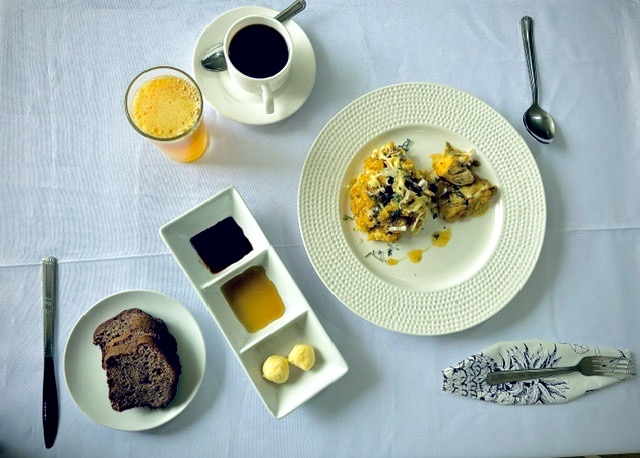
Nothing like a fish stew to underline the prevalence of sustainable fishing in the province of El Oro, while at the same time beginning the day with a recipe worth being hungry for. This stew, prepared with local herbs and vegetables, is accompanied by one of the most emblematic dishes of El Oro: tigrillo con queso. While it is fair to say this recipe of plantain, eggs and cheese is eaten in the whole region, it is also worth noting the cultivation of plantain in this province represents a major economic and cultural pilar. Next to the main dish are three perfect elements for those who like their breakfast with little touch of sweetness. An artisanal banana bread onto which one can spread banana jam made with raw sugar cane and cacao butter. Both bananas and cacao are widely cultivated here. This delicate balance of sweet flavors and textures is completed with cup of Zaruma coffee. Zaruma coffee is one of the most recognized in the country because of its intense flavor and intoxicating aroma. Harvested in the mountains of El Oro, under ideal conditions, the resulting coffee bean is a reflection of a century-old tradition that contributes to the cultural heritage of El Oro.
As there should always be an element of fresh ingredients in a breakfast, this feast is punctuated with a fresh passion fruit juice, rich in vitamin C and digestive qualities, and a generous portion of papaya and pineapple, recently harvested from the area.
 Lorena Fernández Abdo
Leave a comment