(Para español, haz click aquí)
Carchi: prepared by chef David Delgado
In the border province of Carchi nobody over complicates themselves with breakfast; it is a straightforward affair. A breakfast that appears simple requires each element to be prepared and presented exactly right, as there is nowhere to hide when you go back to the basics. We begin with scrambled eggs of free-range chickens, characterized by their bright orange yolk, rich in vitamins A, D, and E. The eggs are accompanied by traditional indigenous tortillas, cooked on clay plates with artisan flour, lard, and raw cane sugar. Onto these delights we spread mashed avocado, as Carchi is the first producer of avocado in the country. There is also a blackberry jam, made with blackberries of Castilla, an emblematic Ecuadorian variety, which is cultivated mostly by small and medium farming enterprises in the province.
A cup of rich highland coffee is a must, more so as it compliments all the elements of this hearty breakfast. The fruit here represents producers of the diamond peach, an Ecuadorian variety known for its great adaptability.
Finally, we finish with a sunfo tea; a herb from the páramo, endemic to the are known as El Ángel. Sunfo is commonly used to treat stomach, muscular and respiratory problems, as it is a powerful anti inflammatory.
Imbabura: prepared by chef Francisco Guevara-Aroca
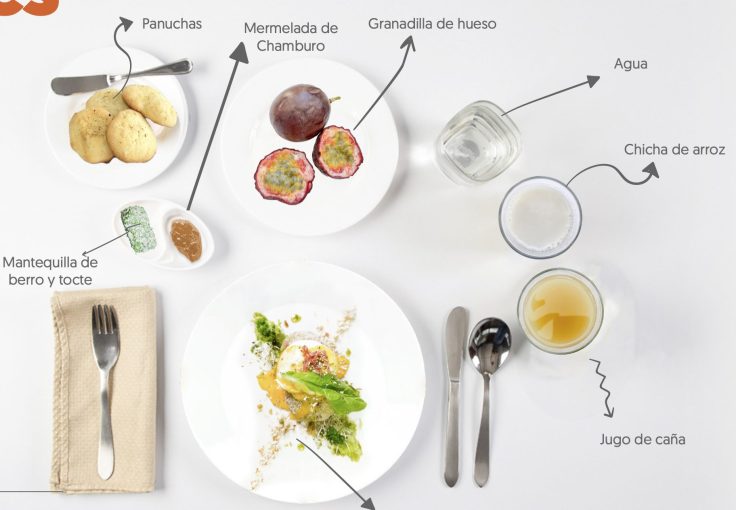
The Andean land of Imbabura is characterized by a diet of highland products. As such, we begin our day with a rich source of protein in the form of mashed porotón (erythrina edulis), a large variety of bean. The consumption of this food has diminished considerably in this area, and it would be good to highlight its value. With a simple boiled mash, alongside a couple of poached eggs, we consolidate both the value of this Andean legume as well as a healthy portion of protein to start the day.
The panucha is a soft yellow bread made with corn and wheat flours; it has been consumed in Ibarra since the late Nineteenth Century. In recent years, however, the tradition of eating this bread seems to also be losing strength, thus giving it a spotlight would encourage its consumption once again. Alongside it comes a berro and tocte butter and a chamburo jam. Berro is a common Andean plant used widely in traditional dishes around rural vicinities of Otavalo, such as the traditional potatoes with berro. The aroma of berros contrasts perfectly with the taste of tocte, a fruit used in the famous nougats of Ibarra. Meanwhile, chamburo is a highland fruit sometimes referred to as mountain papaya. Despite its delightful flavor, it is not a commonly-used fruit in hotels and restaurants these days.
The fresh fruit of this breakfast of traditional flavors is the granadilla de hueso, which originates high in the Ecuadorian Andes. Of all wild passion fruits, this variety is the sweetest, and as such it is highly prized in the valleys of Juncal, Chota and Ambuquí.
A chilled sugarcane juice here represents a highly productive sector of the economy in Imbabura, and a hot broad bean coffee, made with roasted broad beans repeatedly processed and mixed with a freshly brewed coffee complete this unique breakfast in the fertile land of Imbabura.
Pichincha: prepared by chef David Guambi
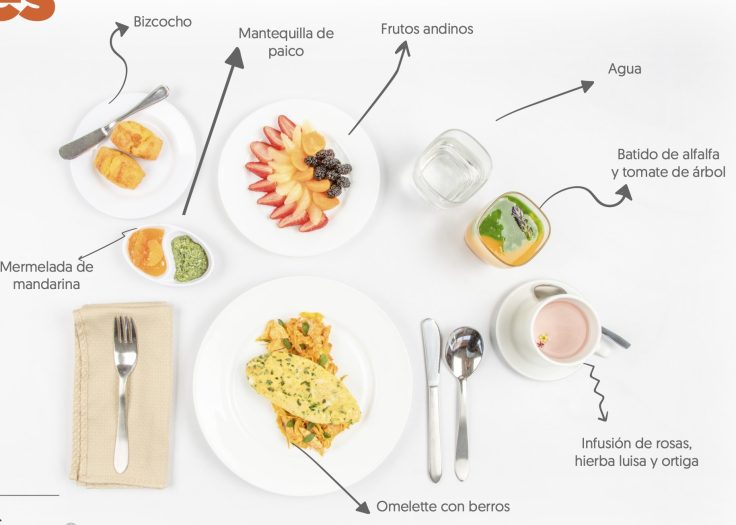
Home to the Ecuadorian capital and a wide variety of weather, environment and ecosystems, Pichincha stands out for its great diversity of gastronomy, whether local, adopted, adapted or completely foreign. It’s not necessary, however, to borrow a cuisine in order to have a good breakfast in this province of numerous resources. We begin with a watercress omelette — watercress is a climbing plant found on the edges of fresh water bodies, it is rich in iron, calcium and folic acid — and threads of chicken.
To this generous protein portion we add a carbohydrate that all residents in Pichincha know and appreciate: bizcochos of Cayambe. The buttery, crumbly bisquits of this Andean city, famous for its little yellow fingers that are traditionally eaten with string cheese, are a colonial inheritance of baker priests, and although the best ones are baked in Cayambe, there is an innumerable amount of bakeries all over the province that offer this specialty. One can spread a little bit of paico butter on them, a medicinal plant used to treat gastrointestinal problems yet also widely used in local cuisine because of its strong aroma and taste. There is also a jam made with peruchana tangerine, which is widely cultivated in the parrish of San Miguel de Perucho, and is known for being a particulary sweet citric fruit.
A portion of local fruit provide an array of vitamins and serves as a good representation of sectors of the economy where strawberries, gooseberries, blackberries and Persian limes are cultivated.
An authentic touch, the cold drink of this breakfast consists of an alfalfa and tree tomato smoothie, and to finish, an infusion of rose, lemongrass, and nettle. Rose farms are considered one of the strongest pilars of the national economy, since the quality and beauty of the roses grown in Pichincha is recognized around the world.
Santo Domingo de los Tsáchilas: prepared by chef Juan Armendaris
Despite this being a young province, Santo Domingo de los Tsáchilas has much to offer in the way of gastronomy due to the great variety of ecosystems it holds and to being a centre of commerce, which attracts people from all over the country. The efforts of local smallholder livestock farmers is reflected on a slow-cooked beef stew. To accompany this protein comes a plantain bullet, crispy on the outside and soft in the middle. The consumption of plantain in the province is their “daily bread”, and as such, there is a wide variety of methods to cook it and season it. This bullet is best condimented with a peanut sauce, which adds a hefty amount of energy to begin the day. Three types of fruit represent the plethora of crops in Santo Domingo de los Tsáchilas: extensive fields of pineapple, colorful plantations of pitahaya, and exotic palm trees of orito, a small, sweet banana. To drizzle onto the fruit, a serving of local honey, which is abundant and rich due to the immense variety of flowers available for pollination. A refreshing passion fruit juice cleanses the palette and serves as a reminder that this is a tropical area abundant in native fruits. To finish off, a Santo Domingo coffee, famous for its quality and character, but also a perfect compliment to any plantain dish.
Cotopaxi: prepared by chef Jorge Salas
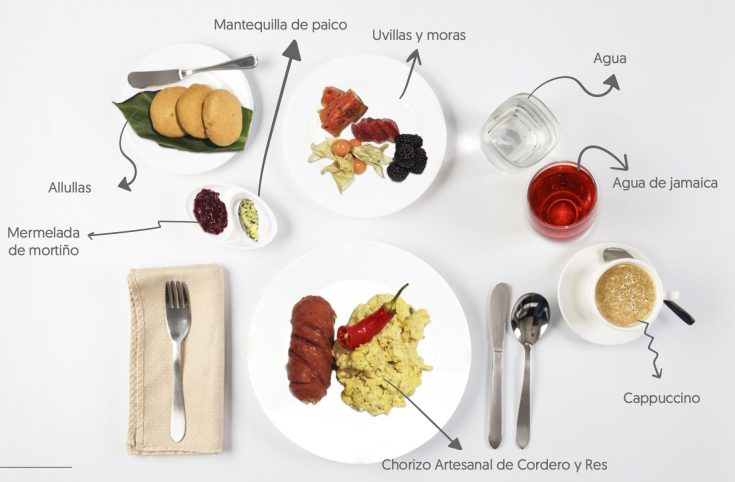
Filled with extraordinary scenery, strengthened in its Catholic faith, and empowered by its creative cultures, the province of Cotopaxi is also a great place to have breakfast. Here we start the day with an artisanal chorizo made with beef and lamb meats, produced in the canton of La Maná, from which aromatic herbs are also harvested to season this novelty product. The sausage comes accompanied by the famous allullas of Latacunga, a distinctive and traditional carbohydrate in Cotopaxi. These small, crunchy crackers are a good representation of the wheat production of the region, and are quite delicious with a bit of butter mixed with epazote and roasted fig leaf squash seeds. Alternatively, allullas are also lovely with a bit of mortiño jam. The andean blueberry features in a number of traditional Ecuadorian recipes, and grows in abundance around the rural areas of Sigchos.
A generous portion of gooseberries and blackberries, to add a delightful touch of acidity, along with a high dose of antioxidants and vitamins, will represent the colorful variety of the local gastronomy.
As one is likely to wake up thirsty at the altitude of the various towns of Cotopaxi, staying hydrated is key. With that in mind, this breakfast offers three beverages: first, a sparkling mineral water infused with muña leaves, knows for its digestive powers, and dried Andean hibiscus flowers. Then a frappé made with prickly pear from the parrish of Victoria. This sweet and refreshing fruit makes for a novelty drink. Finally, so that no one gets too cold, a Cotopaxi cappuccino, made with fresh local milk and organic coffee from the canton of Pangua.
Tungurahua: preparado por el chef Carlos Cabanilla
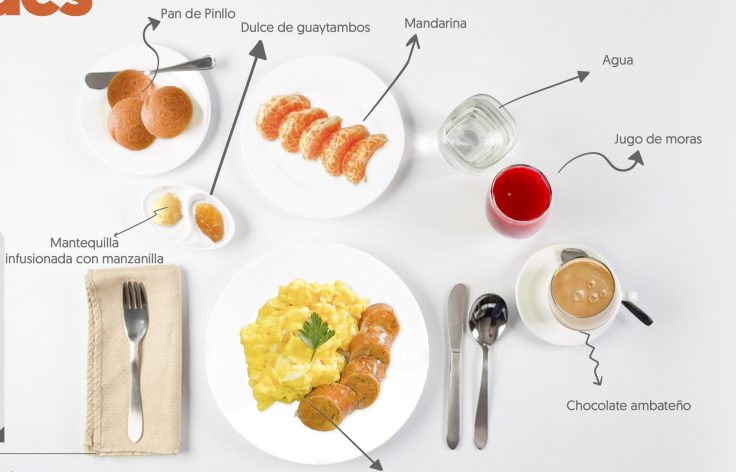
Cradled in the center of the country, the small province of Tungurahua is of monumental importance in the commerce and tourism of the region. Here, the Andean peaks melt into an array of waterfalls that flow into the Ecuadorian jungle and eventually feed the great Amazon river. In this humid province, a good breakfast begins with a pork, beef and bacon chorizo, representing the cattle industry. It is served with quail eggs, thus completing a generous portion of protein.
For over 100 years the people of Ambato and its surrounding areas journey to Pinllo to buy a plethora of breads, which here is offered alongside butter infused with local chamomile and a preserve of guaytambo — a local variety of peach introduced in Ecuador over 400 years ago — and peach, both harvested in the areas of Huachis, Montalvo and Pinllo.
The nationally famed tangerines of Patate not only compliment this breakfast with a good amount of vitamin C, but also represent hundreds of haciendas and families who produce this citric fruit of penetrating aroma. We finish off with a fresh blackberry juice, made with sweet blackberries from Tisaleo, and a hot chocolate from Ambato. The famous Ambateño chocolate is traditionally made by roasting cacao beans on clay plates and grinding by hand with rocks.
Chimborazo: preparado por la chef Jessica Robalino
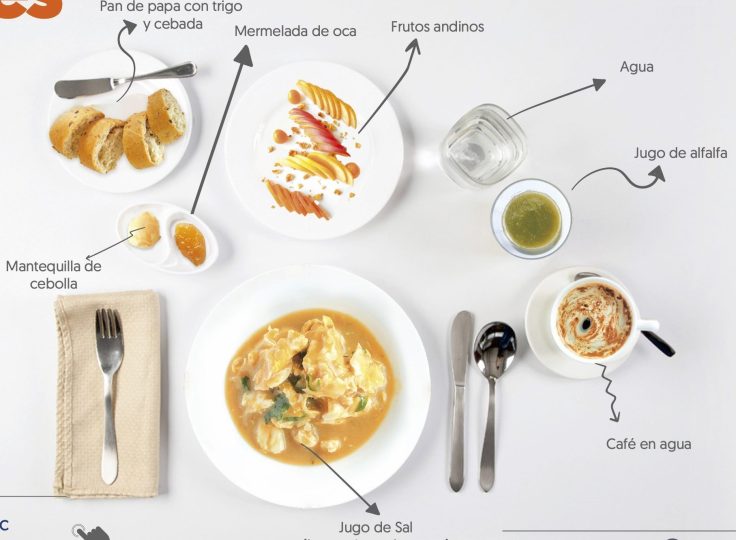
At the heart of the Andean adventure sits the province of Chimborazo, with its unique geographical features that give character to the rich history of this region connecting the coast with the Amazon. In Chimborazo, agriculture and cattle farming are dominant industries. As such, beginning the day with semi-fried eggs and a typical beef stew with local vegetables reassure visitors of the importance of these sectors of the economy whilst also making a gastronomical reference to the traditional “salt juice”of Riobamba, a drink featuring beef gravy and eggs.
To this delightful specialty we add a novelty carbohydrate, one that supports small local farmers: potato bread. This bread is wonderful with a little bit of onion butter spread on top, or with some oca jam. Oca (Oxalis tuberosa) is an Andean product, great for jam, which upon spreading on a potato bread, creates a fusion of traditional flavors of this province. An even bigger and more colorful show of the land of Chimborazo is represented with a fruit salad that features cactus fruit, apple, gooseberries, and peach. These are complimented with mashua yogurt, quinua pops and tocte.
Adequate hydration in the mornings contributes to a good physical and mental performance. Baltazar water, in honor of the Last Icer, is made with ice taken from the highest peak of Ecuador. For a full count of vitamins, an alfalfa and naranjilla juice; very popular in the province. Coffee is not to be missed. This high altitude coffee, cultivated in Pallatanga, ensures that a visitor is kept warm and energetic in order to start a good day.
Bolívar: preparado por el chef Germán Sánchez
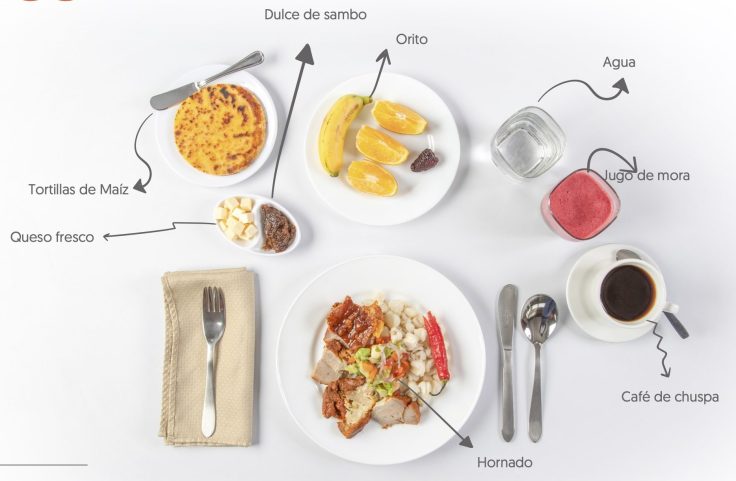
In the province of Bolívar a visitor will bundle up in the high sierra of Guaranda, and will do away with their poncho when going down into the warm subtropic. This geographical contrast reflects the diversity not only of the scenery, but of the flavors, from which the emblematic pork meat becomes a primordial ingredient in any corner of the province. Thus, a good day in Bolívar begins with a pork hornado; a traditional dish slow-cooked in a wood oven and served with hominy and a fresh salad. The magic touch of this breakfast is in the maize tortilla, a symbol of the cantons of Guaranda, Chimbo, San Miguel and Chillanes. This traditional carbohydrate is more than a food: it’s a cultural representation of the Bolivarian table. The tortillas can be eaten with fresh cheese, a local specialty of Salinas, or with pumpkin jam. This pumpkin jam (dulce de sambo) is popular during the Carnival celebrations in Bolívar; it is used as a filling for sweet breads and empanadas, or served on its own as dessert.
A portion of orito, or baby banana, stands out for its sweetness and small size. It is particularly cultivated in Las Naves, Caluma and Echeandía, and is offered here with slices of local oranges from Caluma. Blackberries are an emblematic fruit of Bolívar, especially in the area of Chillanes. The potency of this bittersweet fruit is perfect for beverages, so a blackberry juice is a must. We finish up with chuspa coffee, filtered through a cloth, an iconic local beverage.
Cañar: preparado por el chef Felipe Jimbo
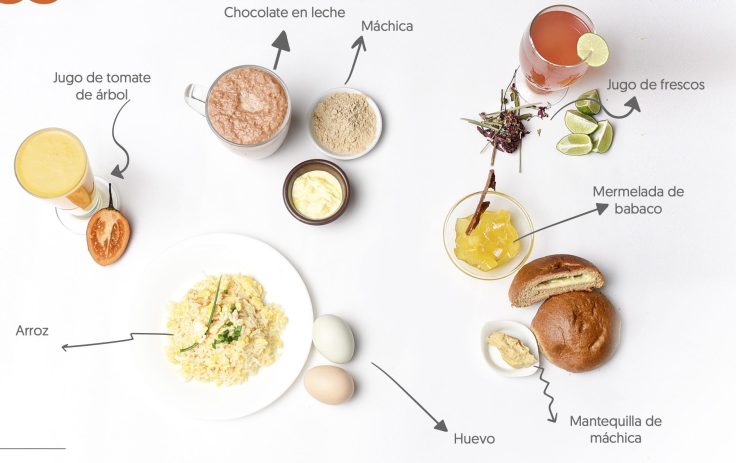
The authenticity of Cañar stands out in a country that has struggled to find its identity. Here there are no masks, no poses, both in its traditions as well as its food. As such, breakfast starts with the leftover rice from yesterday’s lunch: the wishido, or revueltillo, is a mix of runa eggs — this is how free-range chicken eggs are known in Cañar, where it is common for families to keep their own chickens — with the previously cooked rice, and chives to add flavor and aroma. The cold of the páramo lends itself to a generous portion of carbohydrates, hence a mestizo bread is a must. A great virtue of the homes of Cañar relies on keeping traditions like homemade bread. In each neighbourhood there are families with wood ovens, who prepare and deliver bread to their neighbours. Even though the bread is already filled with delicious fresh cheese, a serving of toasted máchica butter tops off the flavor. Máchica is a flour made with toasted barley, maize or wheat, very popular through indigenous Andean communities. There is also a babaco jam, which in Cañar is referred to as one of the pleasures of life.
In small local crops there is an abundance of gooseberries and strawberries, which make for a healthy addition to a Cañar breakfast, plus a freshly-made tree tomato juice, a favourite in the region. A common drink in Cañar is the agua de frescos; an infusion made with at least ten different quotidian herbs such as lemongrass, chamomile, lemon verbena and borraja. It’s drunk cold for breakfast, and sometimes as a mixed drink with puntas (sugarcane liquor) in the evenings. Finally, a traditional chapo: cooking chocolate and máchica mixed together in a cup of hot milk. Milk is still delivered daily by milkmen all over the province. When it arrives early in the morning, people boil the milk and set aside some of the cream that forms on top to mix into their chapo for extra energy.
Azuay: preparado por el chef Darwin Cordero
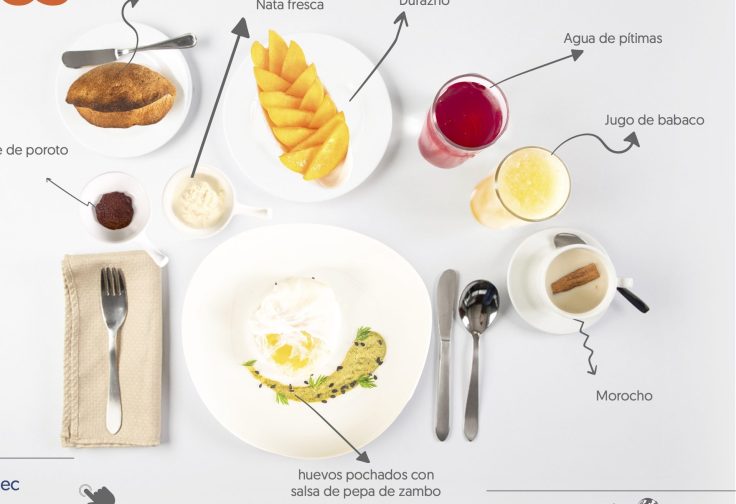
Adorned with cultural and historical patrimonies, immensely creative Andean towns, people of non-exhaustive hospitality, and rich ecosystems that create natural wealth, Azuay offers more than any visitor could hope for. A glorious day begins in Azuay with a breakfast consisting of poached eggs with a pumpkin seed sauce. In Azuay it is common to consume local free-range eggs, not just for its increased nutritional value, but also as a way to support small-time farmers across the province.
Near the capital, Cuenca, is the small parish of Nulti, where approximately 30 families keep a baker’s tradition and make bread in wood ovens. A bread from Nulti is perfectly complemented with fresh cream, as the tradition of having bread with cream in Cuenca is as old as the cathedral itself. There is also a traditional bean jam from Gualaceo, which is popular during Carnival. Going a bit further into Cuenca, next to the Plaza de las Flores, one can find the colorful shop of the Carmelite nuns, who sell the famous pítimas water. This drink, made in the monastery of Asunción, combines rose petals, carnations, valerian root, lemongrass, lemon verbena and other herbs. They started selling it over 70 years ago, and it was such a success that the quichua word “piti”, meaning a little bit more, became the name of the drink, as customers were always asking for a little bit more. To the pítima water we add a babaco juice, a fruit that can easily relate to the identity of Azuay, and a hot hominy drink, as this sacred Andean food lends itself to all manner of recipes. We finish off with a portion of fresh fruit: Azuayan peach, the protagonist of the festival Colors, Aromas and Flavors of the Paute canton.
Loja: preparado por el chef Franklin Rosero
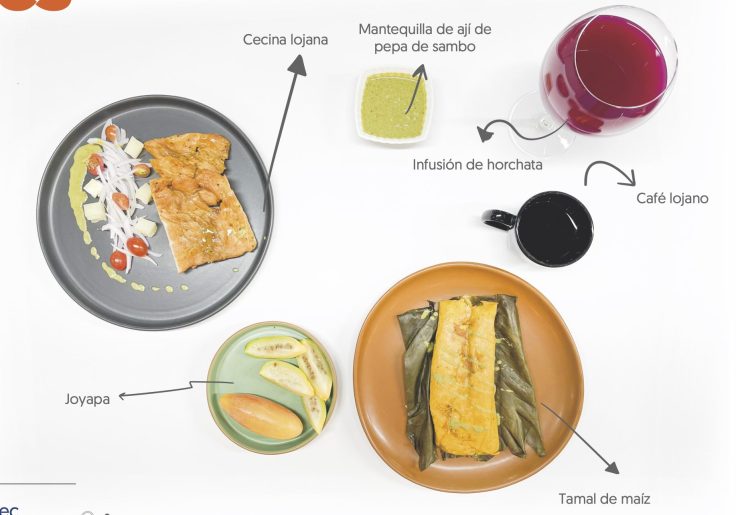
The treasures of Loja are so varied and unique that together they are capable of stimulating all the senses. Still, this frontier province stands out for the hospitality and gentleness of its people. In Loja breakfast is great, not just because they have vast resources and culinary creativity, but because no lojano host would allow anything less than a feast of novelty foods. We begin, then, with the importance of tradition, which reigns this province. A cecina lojana, popular and always freshly made, consists of pork meat roasted on the grill. This protein is served with pickled onion and tomato, and can be accompanied by carbohydrates such as rice or cassava, however for this breakfast it goes hand in hand with another Loja tradition: a corn tamal. This most nutritional dish is steamed inside a leaf of achira, and it’s filled with local vegetables. In Loja, one cannot serve a tamal lojano without a generous portion of pumpkin seed spicy sauce, so in this sustainable breakfast, a portion of pumpkin seed spicy sauce butter is presented. This creamy and spicy mix accentuates the flavor of the tamal. However, for those who prefer a sweet touch, there is a joyapa (Macleania rupestris) jam. This fruit is native to the Ecuadorian Andes, much like the fresh portion of toronche (Bunchosia armeniaca), a fruit rich in vitamins A and C, and antioxidants, and a perfect reflection of the biodiversity of this Andean region.
An infusion of over 20 local herbs is both refreshing and a digestive aid. We finish off with a lojano coffee, famed nationally and internationally for its delightful flavor. Coffee is grown extensively in the mountains of the region and is an essential drink in any lojano breakfast.


One response to “Ecuadorian gastronomy: Andean breakfast”
Thanks for sharing this amazing breakdown of Andean breakfasts across Ecuador. The attention to local ingredients and traditions in each region really shows how diverse and rich the country’s food culture is. Now I’m craving some bizcochos with cheese and a cup of Loja coffee!
LikeLike