Tadeus liked to sing when things got too quiet. “Ethiopia something-something nation!” He’d mumbled the bits he couldn’t remember well, and if he caught me looking at him he would stop and make a dance with his chest inflated. To be honest, neither Jim nor I liked Tadeus very much; he had been given a rifle and told he would be our scout — which is required for hikers at the Simian Mountains National Park — but I don’t think anyone had bothered showing him what a rifle is to supposed to do, thus he carried it around carelessly pointing it at us, and when he sat down, he’d rest his chin on the barrel.
It also seemed to me that though he was familiar enough with the paths in the mountains and only asked directions when he thought we wouldn’t notice, he was not one to enjoy a long walk. “Jam! Wooter” he would complain to Jim when it would start to drizzle, and he would call for a break by asking if we wanted to stop again and again and again until we would either stop with him or got irritated and walked past him.
Whenever peace and quiet threatened to overcome us, Tadeus began the Ethiopia song again, or else alternated by listing the dozen words he knew in English. “Flower, cow, mountain, donkey…”
By the third day of hiking, he complained that it was too cold and rainy and he wanted to go home. He probably said much more — he talked incessantly— but it was all in Amharic, thank God.
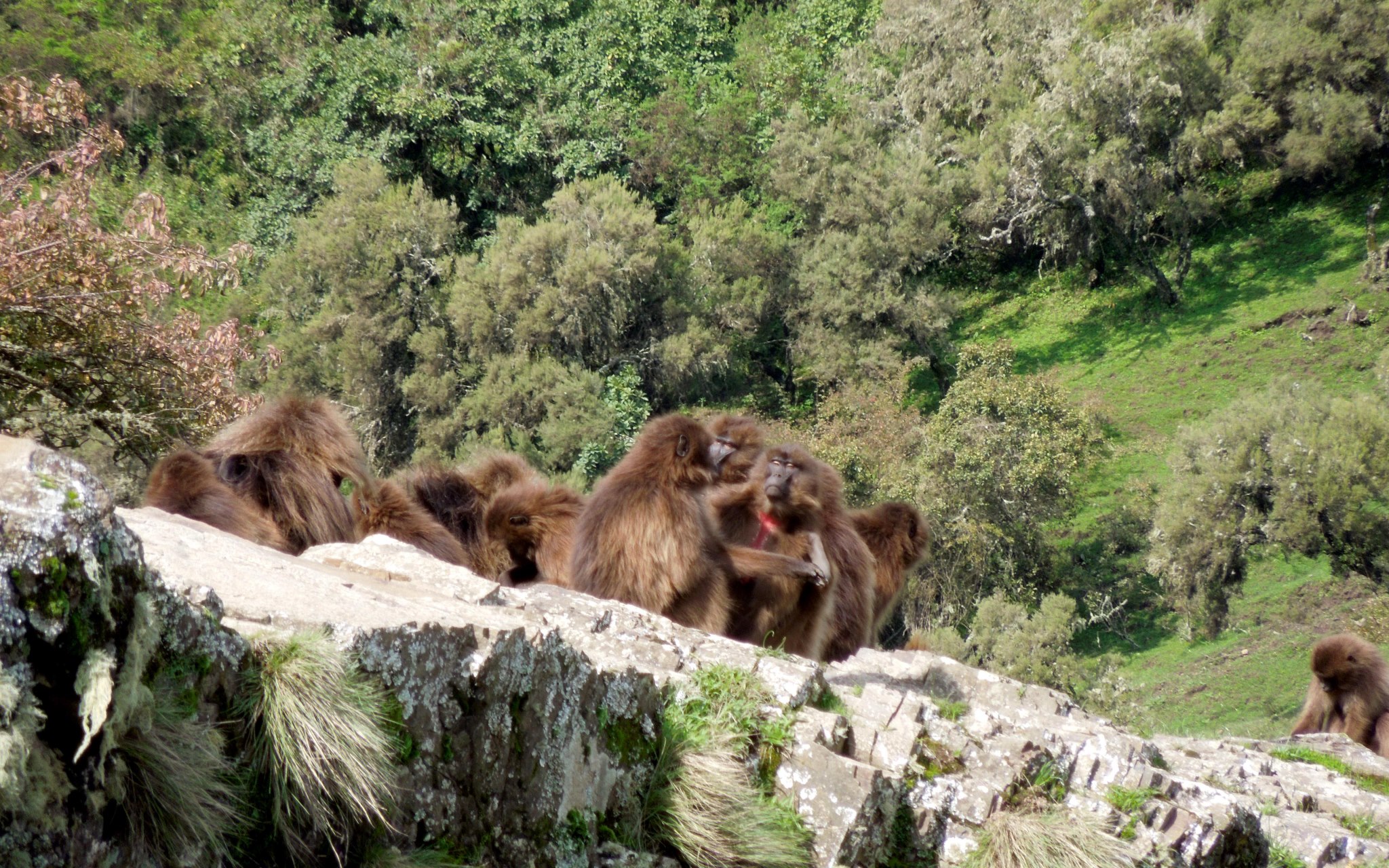
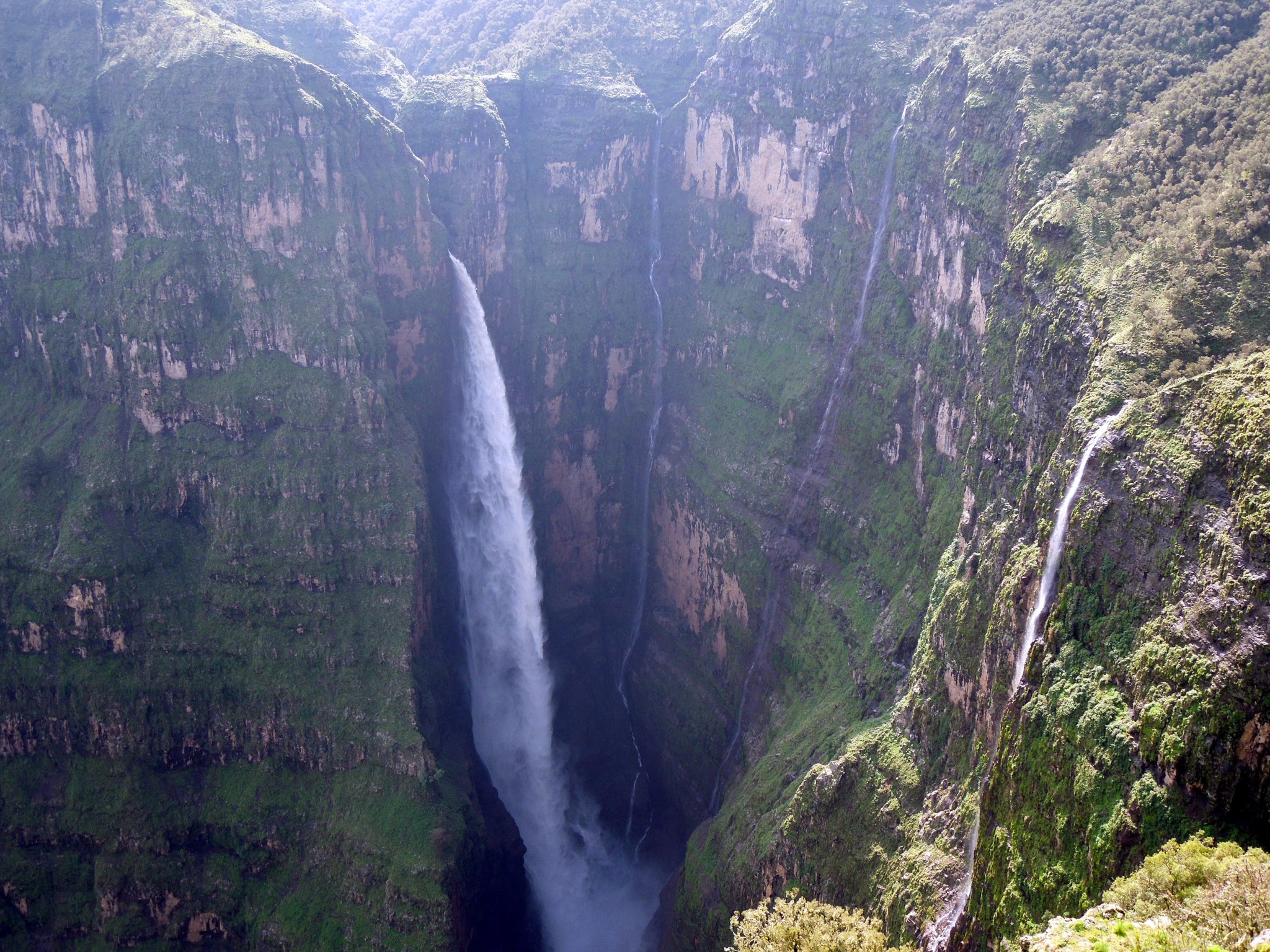
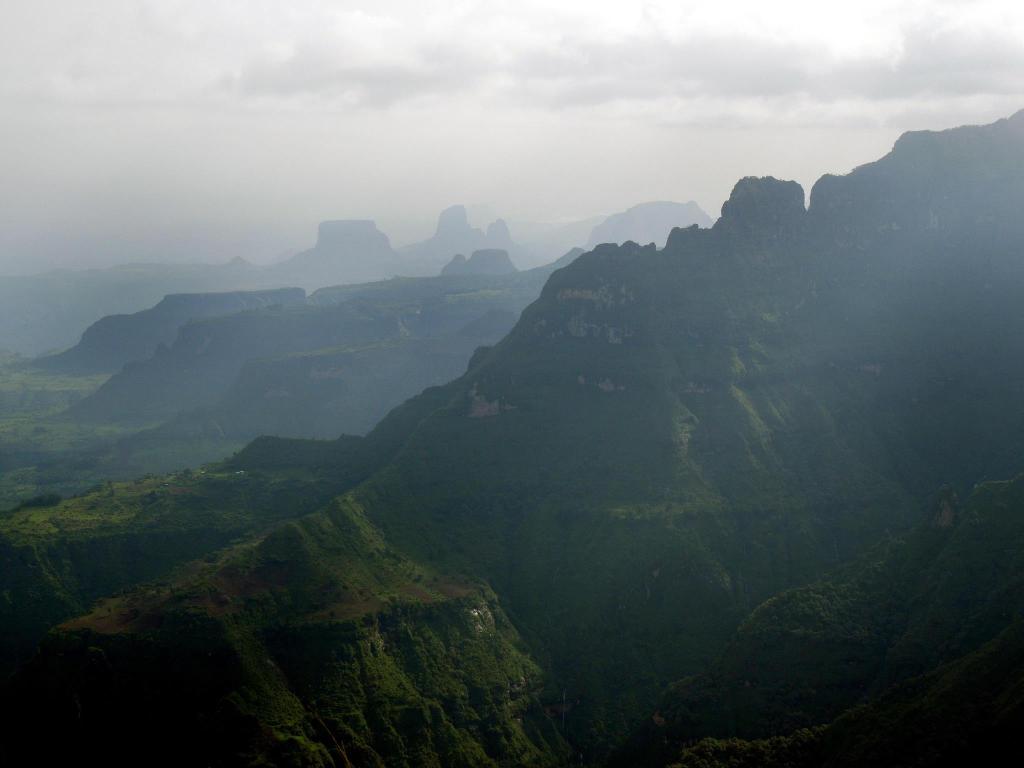
All in all, hiking in the Simian Mountains was a fantastic experience, because not even Tadeus could manage to ruin the dramatic beauty of the scenery. The waterfalls take every available drop in the distance to pour gushing white water to the most intense shade of green valleys. Wild horses graze on high plains. Hundreds of baboons sit together eating bits they find in the grass. Clouds pass through with such velocity it feels like gates to new sceneries teasing to show a treasure just a few steps away. And in the rainy season, it rains. That’s not exactly fantastic, though it was impressive how thoroughly soaked we managed to get in 15 minutes under the torrential rain. Water-proof shoes? Ha! What a small challenge for the Ethiopian rain!
My shoes remained wet for the rest of our time in Ethiopia — then took two and a half minutes to dry in the heat of Egypt — but behind fast-moving clouds we discovered many of the treasures of this millenary land. Mostly, churches. All the devotion of Latin American Catholics would fall to its knees to see the commitment that Ethiopians have to the Christian God. There’s not a person in sight without a cross around their neck; on Easter hundreds of thousands around the country make the pilgrimage to the sacred churches of Lalibela, which were all carved — carved! — out of the same giant rock. In January every year the baptism ceremony at the ancient Roman-style bath in Gonder draws the population of the entire town plus many visitors who partake in the holy water splishy-splashy. The monks living in monasteries on the lake of Bahir Dar are perhaps only slightly more devoted than the rest of the population. There are so many historical connections to Bible stories in Ethiopia that it makes one wonder where history ends and belief begins. UNESCO, amongst many other institutions and people from the West have tried to “rescue” the ancient history and “preserve” sites and landmarks. They’ve done what they could, I suppose, but these are not things to be left to rest in museums; they are very much still in use and an intrinsic part of the living, breathing culture of Ethiopia.
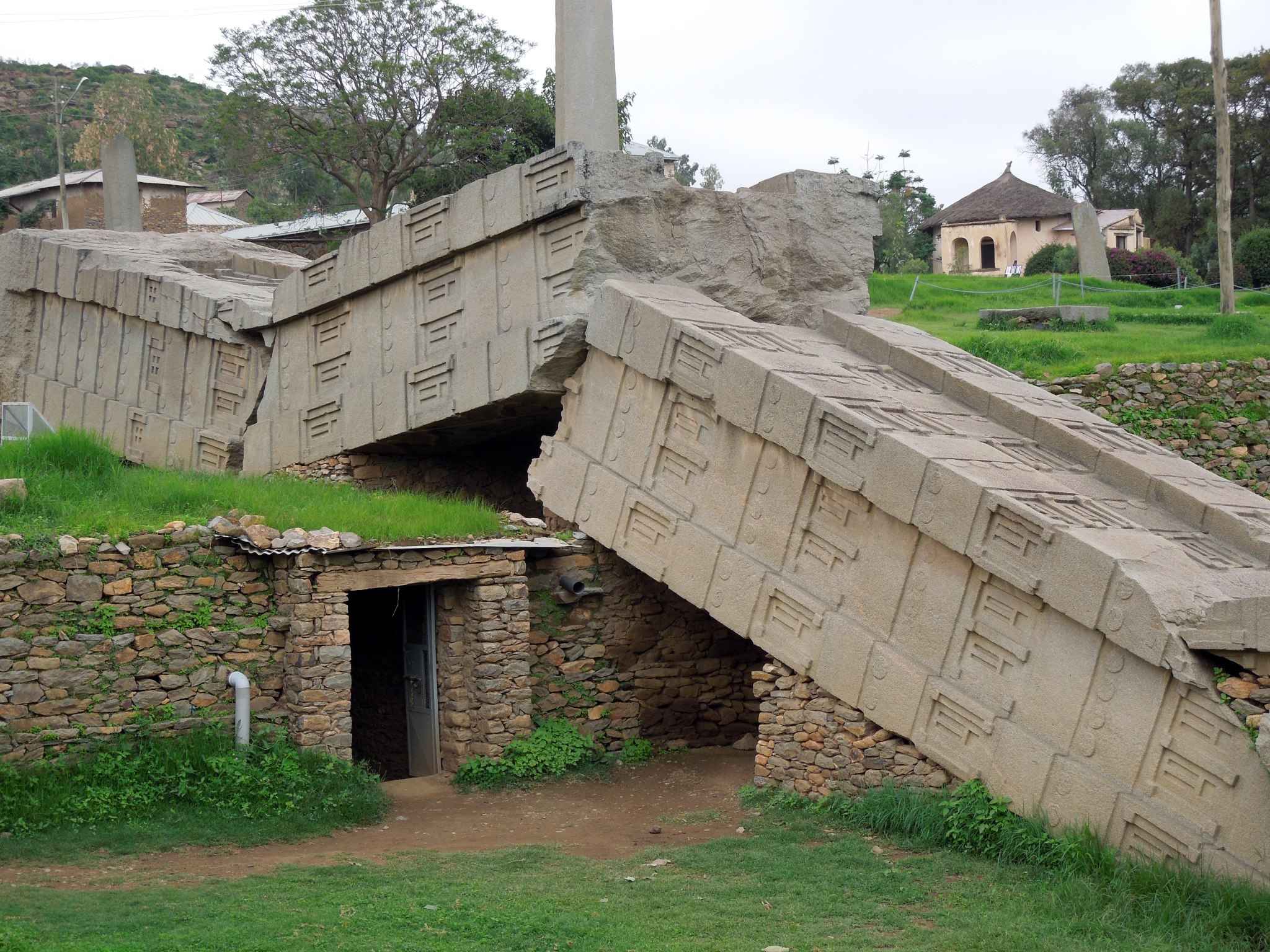
A boy came to me in Axum, the ancient capital of the kingdom of Abyssinia, and offered to sell what he said his cousin had found in his backyard: it was a couple of ancient coins with the head of King Kaleb, who died in c. 520. That’s right, coins from the 500’s, can be yours for only a couple of dollars! Only an estimated 8% of what rests under the earth of Axum has been dug up by archeologists. During the rainy season is not uncommon to find bits that the water has washed to the surface.
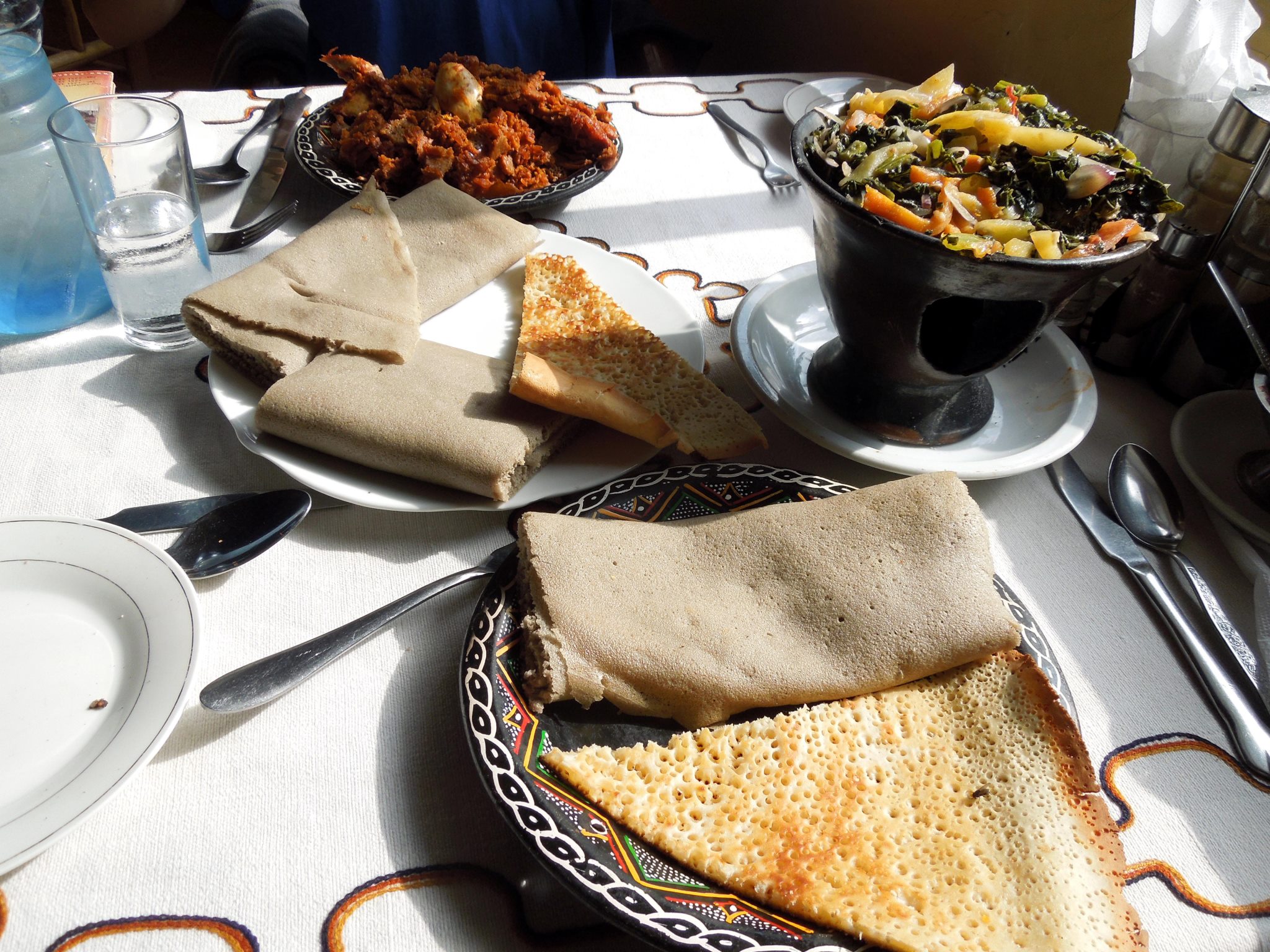
Ethiopia is not just unique in its history — of which they have so much, it comes to surface on a rainy day — it is actually so full of larger-than-life characters, that they can let people like Haile Selassie (who’s name before that was Ras Tafari) be a bit of a minor character. The people themselves are magnificently unique. From the national pastime (not football, but table football, futbolín!) to the way they measure time (7am is actually 1am), and their calendar, in which it is only the year 2004 while most of us cruise 2012, to their finger-licking food (their famous bread, injera, is unlike any bread anywhere in the world), Ethiopia is simply astounding.
 Lorena Fernández Abdo
Leave a comment